Website Pricing Breakdown: Where Your Budget Goes
If your main goal is simply to establish an online presence, marketing websites can start from around $1,000–$4,000, depending on the platform, project requirements, and level of development. Lower-cost options can work for simple business websites, but they often come with trade-offs in quality, support, scalability, and analytics.
There’s also a growing risk with AI “vibe coding.” The website might look good at first glance, but problems can show up later in performance, responsiveness, SEO, security, or ongoing support. Our websites prices list looks beyond the initial build and breaks down what you’re actually paying for at different levels of website development.
| Website Type | Typical range | Results you can expect |
|---|---|---|
| Landing Page / Pre-Made Template | $1000-2000 | Online Presence |
| Basic but optimised for marketing website | $3000-4000 | Online Presence + Potential Marketing Optimization |
| Lead Generation Website or Solution for an Established Brand | $6000-8000 | Strong Brand Positioning + Marketing optimisation usually marketing services included |
| eCommerce website Pre-Made Template | $4000-6000 | Online Presence + Potential Marketing Optimization |
| Online Store optimised for Marketing | $6000-8000 | Strong Brand Positioning + Marketing optimisation usually marketing services included |
| Enterprice solutions | Usually on hourly rate | Depends on the Company’s Goals |
What Factors Affect Website Cost?
A lot of people still think a website is simple: build it, fill it with content, and voilà - you have leads. Maybe that worked in the 2010s, but today a successful website is a much bigger project. It needs the right strategy, design, development, analytics, hosting, and ongoing support to actually work for a business.
| Factor | How It Affects the Price |
|---|---|
| Project complexity | More pages, features, integrations, and custom functionality increase the overall cost. |
| Design | A custom UI/UX design costs more than adapting a pre-made template. |
| Platform | WordPress, Shopify, Webflow, and custom platforms have different development and maintenance costs. |
| Development | Custom front-end development, CMS features, animations, and integrations add to the budget. |
| Content | Copywriting, photography, video, illustrations, and other content can require additional work. |
| SEO | Technical SEO, keyword research, content structure, and SEO landing pages increase the scope. |
| Ecommerce | Products, payments, filters, accounts, shipping, and inventory make the project more complex. |
| Analytics | GA4, conversion tracking, events, and other analytics setup can add to the project cost. |
| Hosting | Hosting, security, backups, CDN, and other infrastructure create both initial and ongoing costs. |
| Testing & QA | Cross-browser, mobile, performance, and functionality testing require additional development time. |
| Support | Ongoing updates, maintenance, security, and technical support affect the long-term cost. |
| Timeline | A shorter deadline may require additional resources and increase the final price. |
Best Website Platforms by Price
The platform you choose has a direct impact on your website budget, but the platform itself is only part of the equation. A simple WordPress or website-builder project can be relatively affordable, while custom development, ecommerce functionality, integrations, and ongoing support can push the cost much higher.
| Platform | Typical Website Cost | Best For | Main Advantage |
|---|---|---|---|
| Wix / Squarespace | $500–$3,000 | Small businesses, portfolios, simple landing pages | Fast and affordable |
| WordPress | $1,500–$7,000+ | Business websites, blogs, service companies | Flexible and scalable |
| Webflow | $2,000–$8,000+ | Marketing websites, startups, modern brands | Strong visual control |
| Shopify | $2,000–$10,000+ | Ecommerce businesses | Built for online stores |
| Framer | $1,000–$5,000+ | Startups, portfolios, landing pages | Fast modern websites |
| Custom Development | $5,000–$30,000+ | Complex businesses, web apps, custom platforms | Maximum flexibility |
Wix / Squarespace
Use these platforms when you need a simple online presence without complex development. They work well for small businesses, portfolios, personal websites, and basic service websites where speed and ease of management matter more than deep customization.
WordPress
Choose WordPress when you need more flexibility and control over your content. It’s a good fit for growing business websites, blogs, SEO-driven projects, and companies that expect to add new pages or functionality over time. Check how we create websites here
Webflow
Webflow makes sense when design quality and visual control are a priority. It’s particularly useful for marketing websites, startups, and established brands that want a polished custom design without building a completely custom platform.
Shopify
Choose Shopify when ecommerce is the core of the project. It provides the infrastructure for products, payments, inventory, orders, and other essential online-store functionality without having to develop everything from scratch.
Framer
Framer is a good option when you need a fast, modern marketing website with strong visual design. It works especially well for startups, portfolios, landing pages, and smaller marketing projects where advanced backend functionality isn't required.
Custom Development
You need custom development when existing platforms can't meet the project's requirements. This is usually the right direction for complex web applications, unique business processes, advanced integrations, or products that require functionality built specifically around the business.
How Much Should You Spend on Marketing After Your Website Launch?
Building the website is only the first step. If the goal is to generate leads, you’ll usually need an ongoing budget for SEO, paid advertising, content, analytics, and optimization. The right amount depends heavily on the business model, competition, and how quickly you want to generate results.
| Business Type | Monthly Marketing Budget | Main Lead Generation Channels | Potential 12-Month Outcome |
|---|---|---|---|
| Local Service Business | $500–$2,000 | Local SEO, Google Ads, Google Business Profile | Stronger local visibility and a consistent flow of qualified inquiries +1-2k Customers on a website monthly in 1 year |
| Professional Services | $1,000–$3,000 | SEO, Google Ads, LinkedIn, Content | Growing organic traffic, stronger authority, and a more predictable lead pipeline |
| +1-5k Customers on a website monthly in a year | |||
| Law Firm | $2,000–$6,000+ | SEO, Google Ads, Content Marketing | Improved rankings for valuable legal searches and a larger pool of qualified leads |
| +1-10k Customers on a website monthly in two years | |||
| Medical / Healthcare | $1,500–$5,000+ | SEO, Google Ads, Local SEO, Content | Increased visibility for treatment-related searches and more appointment inquiries |
| +1-10k Customers on a website monthly in two years | |||
| Real Estate | $1,500–$5,000+ | SEO, Google Ads, Social Media | More property-related traffic, inquiries, and qualified buyer or seller leads |
| Reach 1K–10K monthly website visitors within two years. | |||
| B2B Company | $1,500–$5,000+ | SEO, LinkedIn, Content, Paid Search | Greater search visibility and a growing pipeline of qualified business leads |
| Build an online audience of 1K–10K monthly visitors within two years. | |||
| SaaS / Startup | $1,500–$5,000+ | SEO, Content, Paid Search, LinkedIn | Increased qualified traffic, demo or signup opportunities, and better acquisition data |
| Achieve 1K–10K monthly visitors to your website in two years. | |||
| Ecommerce | $1,500–$5,000+ | Google Shopping, Paid Social, SEO, Email | Higher product visibility, more qualified traffic, and an established acquisition funnel |
| Grow from a new website to 1K–10K monthly visitors within two years. |
Questions to Ask a Web Agency Before Choosing Who to Work With
The cheapest proposal isn’t always the cheapest project. Before choosing an agency, you want to understand what you’re actually getting, who will be responsible for the work, and what happens after launch. These questions can help you compare agencies based on their process, experience, communication, and ability to support the project beyond simply building the website.
| Question to Ask | Why You Should Ask |
|---|---|
| Have you worked on projects similar to ours? | Shows whether the agency understands your industry, audience, and business requirements. |
| Can I see your recent work? | A portfolio helps you judge the actual quality of their design and development rather than relying on promises. |
| Who will actually work on the project? | Some agencies outsource development or assign junior team members after the contract is signed. Knowing the team gives you more clarity. |
| What is your process from discovery to launch? | A clear process usually means fewer surprises, missed requirements, and unnecessary revisions. |
| What is included in the price? | Helps you identify hidden costs and understand exactly what the proposal covers. |
| What is not included? | Equally important—it can reveal costs for content, SEO, integrations, hosting, maintenance, or additional functionality. |
| How do you handle revisions and feedback? | Establishes how many revision rounds are included and how feedback is managed during the project. |
| Who owns the website and its files after launch? | You should know whether you will have access to the design files, code, CMS, domain, hosting, and other project assets. |
| How do you approach SEO? | A beautiful website is less useful if search engines and users can't find it. Ask whether SEO is considered during structure and development. |
| Do you provide analytics and conversion tracking? | Tracking helps you understand where visitors come from, what they do, and whether the website is actually generating results. |
| What happens after the website launches? | Find out whether the agency provides support, maintenance, bug fixes, updates, or ongoing development. |
| What happens if the project goes over budget or schedule? | This clarifies how the agency handles unexpected requirements, delays, and additional work. |
| What CMS or platform do you recommend and why? | The right platform should match your business needs rather than simply being the agency's favorite tool. |
| How do you test the website before launch? | Ask about mobile responsiveness, browsers, performance, forms, integrations, accessibility, and QA. |
| Can you provide references or client contacts? | Speaking with previous clients can give you insight into communication, reliability, and the overall experience. |
Our Results: A Few Case Studies
See how we approach real projects - from strategy and UX/UI design to development, SEO, and conversion optimization. Explore a few case studies to see the work and results behind our process.
Lada Clinic
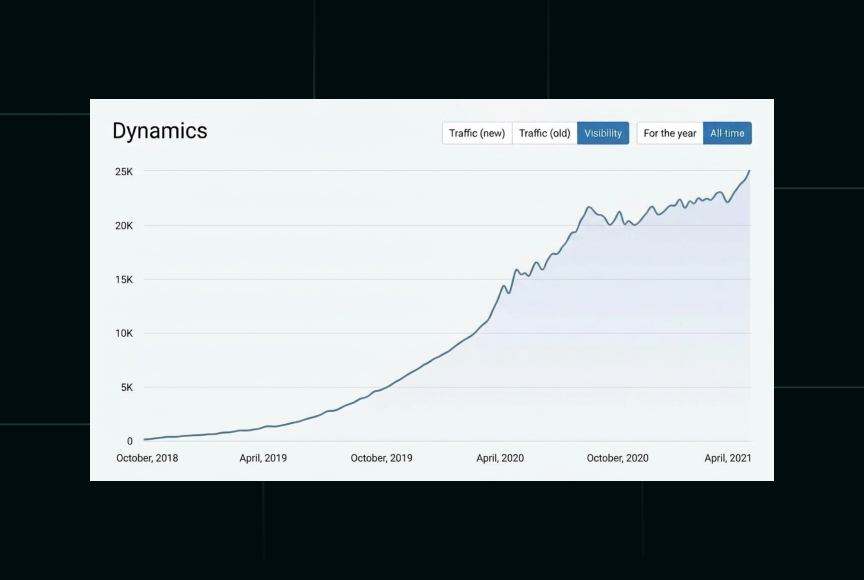
+30K website users in 3 years
A stronger organic presence and a website built to support patient acquisition.
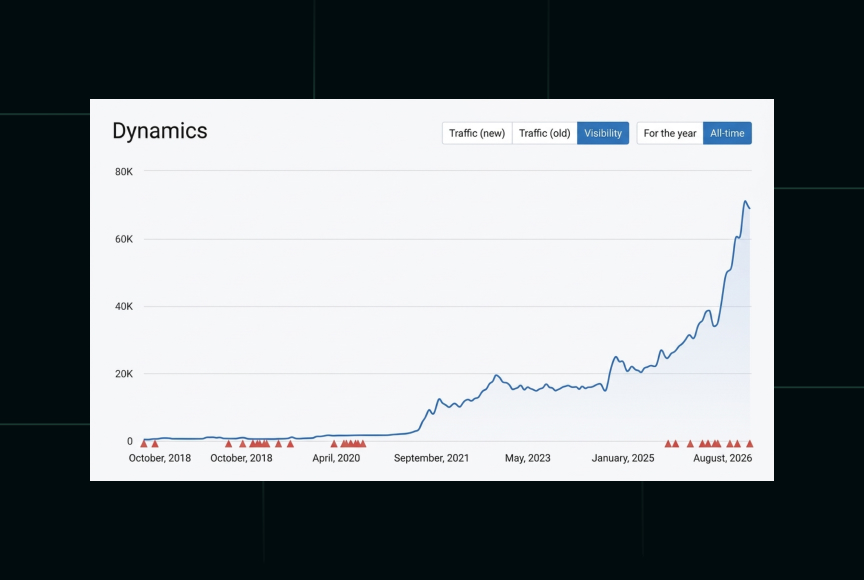
Carter & Partners
+20K website users in 2 years
A modern law firm website designed to strengthen visibility and attract more organic traffic.