_3i6y1okumucd4u6d.png)
A Website That Works: What Makes It Great
Main mission of your website is to tell your brand’s story clearly, communicate what your company does, and give potential clients a reason to choose you. From the content and structure to loading speed and performance across devices, every element should work together to create the right impression. A well-optimised website turns your online presence into a tool that builds trust, explains your value, and helps your company attract new clients.
5 Key Characteristics
1. The Right Plan and Strategy
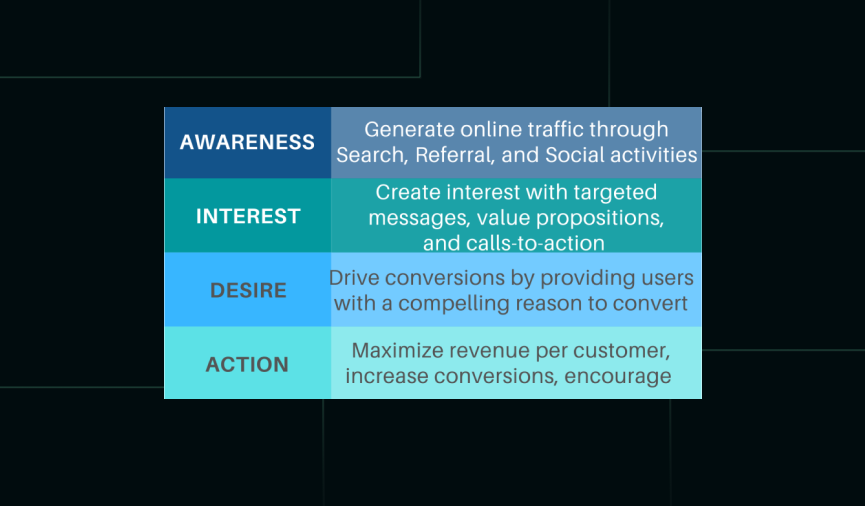
The best websites start with a marketing strategy, not a sitemap or visual concept. Start by defining your goals, audience, positioning, and customer journey using a framework such as AIDA or another proven marketing model. Then analyse your competitors and decide which marketing tools your digital solution will need - from lead forms and calls to action to SEO and analytics. Based on this strategy, you can build the website structure and content around how people actually discover, understand, and choose your company. Only then should design and development begin, with every element optimised to support the strategy across different devices and ensure fast loading.
2. A Clear Website Structure
Once you have the strategy, it’s time to figure out what actually needs to be on the website. Start with your competitors: see what they do well, take the useful parts, and then make them better - not just copy-paste the whole thing.
Add some creativity, but don’t get too carried away. A website still needs to make sense. The structure should be optimised for Google and conversions, with clear navigation and a logical path from “Who are these guys?” to “Okay, I want to contact them.” Every page should have a purpose and support your company goals, while working properly across different devices. Because nobody enjoys hunting for a contact button like it’s a treasure map.
3. Design That Makes Your Brand Stand Out
If your brand already has a strong positioning, the digital experience design should make it visible at first glance. It’s not about adding more animations, gradients, or giant headlines just because we can. The design should match your brand, speak to the right audience, and make the website feel like your company - not a random template.
This is how we approach web design, Learn more here
Good design should also make information easy to understand. Clear hierarchy, strong typography, smart use of visuals, enough breathing room, and consistent UI help visitors quickly understand what you offer and where to go next. It should look impressive, but more importantly, it should make sense.
4. Marketing-Optimised Development & an Easy-to-Use Admin Panel
A good design is only half the job. During development, the product needs to be built around the marketing strategy from the start - with the right forms, CTAs, tracking, SEO basics, and other tools that help turn visitors into leads.
Performance matters too. The web page should have fast loading, work smoothly across devices, and be properly optimised for search engines and users. At Integritas, we also make sure the admin panel is easy to use, so your company can update content, add pages, and manage the website without calling a developer every time you need to change a sentence, Here’s how we build WordPress websites.
5. SEO Strategy and Content
SEO shouldn’t be something you add after the website is finished. It should be part of the plan from the beginning. Your structure, pages, headings, and content should be built around what your potential clients are actually searching for.
Start with keyword research, understand search intent, and look at what already works for competitors. Then create useful content that answers real questions instead of stuffing every paragraph with keywords. The goal is simple: help Google understand your website and help people find the right information - ideally before they start looking at your competitors.
What to Do After Your Website Is Live?
Launching the website is not the finish line. It’s more like opening the doors for the first time. If you want your website to become a real marketing tool, expect at least 1–2 years of ongoing work: improving SEO, testing different approaches, adding content, analysing user behaviour, and constantly making small improvements.
It might sound like a lot of work, but you won’t regret it when the website starts bringing you results instead of simply sitting online looking pretty.
- More organic traffic - consistent SEO and content can help your website become more visible in Google.
- More qualified leads - you can learn which pages, offers, and CTAs actually bring potential clients.
- Better conversion rates - small changes based on real user behaviour can turn more visitors into enquiries.
- Stronger brand presence - regular updates keep your website relevant and aligned with where your company is going.
- A competitive advantage - while competitors leave their websites untouched for years, you keep improving yours.
- Better data for decisions - analytics show what people do on your website instead of making you guess.
- A website that keeps working for you - over time, your website becomes more than an online business card. It becomes part of your marketing system.
Conclusion
A great website is not just a good-looking collection of pages. It should explain your brand, communicate your value, build trust, and help you get new clients. The best results come when strategy, structure, design, development, SEO, and content all work together.
And remember: launching the website is just the beginning. Keep testing, improving, adding useful content, and learning from your visitors. Give it time, and your website can grow from a simple online presence into a real marketing tool for your company.