The Best SaaS Tech Stack for 2026 (and How to Actually Choose One)
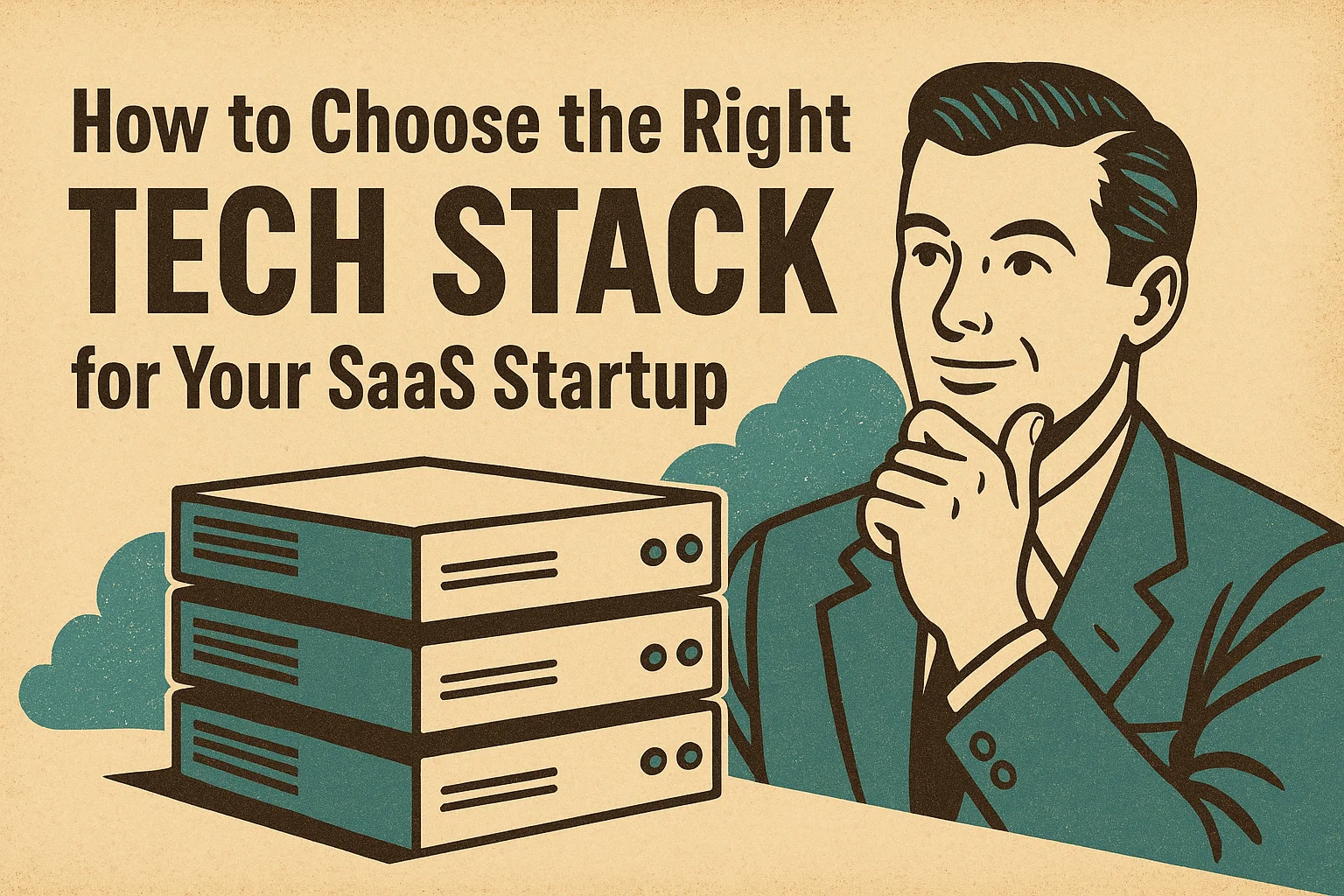
"Node.js or Laravel? SQL or NoSQL? Which framework?" If you are building a SaaS and these questions are keeping you up, welcome to the void. Choosing a tech stack feels enormous because it is one of the few decisions that is genuinely hard to reverse. The good news is that the right answer is more about your situation than about which technology won the internet's latest argument. Here is how to actually choose.
Why the SaaS Tech Stack Question Hurts So Much
Faced with the choice, founders tend to do one of three things: spend six weeks reading conflicting blog posts, ask an AI and then ignore the answer, or hire the cheapest team who recommends WordPress "because it's flexible," which is its own kind of mistake. The paralysis is understandable, because the decision feels permanent.
Here is the reframe that helps: your SaaS tech stack is not just code. It is your future technical debt, your scalability ceiling, your hiring pool, and your maintenance cost for years. That is exactly why it deserves thought, but also why the goal is not finding the single perfect stack, it is avoiding the clearly wrong one for your situation. There is no universal best, only the best fit.
What Is a Tech Stack in SaaS?
A tech stack is the combination of technologies your product runs on: the frontend framework users interact with, the backend language and framework that handles logic, the database that stores data, and the infrastructure it all runs on. Each layer affects the others, and together they determine how fast you can build, how well you scale, and how easily you can hire. Understanding the stack as a connected whole, rather than a list of trendy tools, is the first step to choosing well.
Node.js vs Laravel: The Grudge Match of SaaS Backends
This is the debate that consumes the most founder hours. Node.js is a JavaScript runtime that excels at real-time, high-concurrency workloads and lets you use one language across frontend and backend. Laravel is a structured PHP framework that offers convention, built-in security, and excellent tooling that gets conventional SaaS products to market fast. Frameworks like NestJS bring more structure to the Node world for those who want it.
The honest answer is that both are excellent and the choice depends on your team and product. Choose Node.js for real-time features and JavaScript-everywhere teams. Choose Laravel for conventional, structured SaaS where development speed and built-in security matter. For most dashboard-and-billing products, either will serve you well for years, so pick based on what your team knows rather than what is fashionable.
Your SaaS Stack Depends on Your Stage
MVP (Minimum Viable Product)
At the MVP stage, speed to market beats everything. Choose a stack your team already knows and that lets you ship fast without over-engineering. A structured framework like Laravel, or Node.js with a sensible setup, paired with a simple managed database and easy hosting like Render, gets you validating your idea quickly. Do not build for a million users you do not have yet.
Growth Phase
Once you have traction, the priorities shift to scalability and maintainability. This is when you invest in better architecture, caching, proper monitoring, and a database design that handles growing load. The stack that launched your MVP often carries you here too, if it was chosen well, which is exactly why the early decision matters.
Enterprise Ready
At enterprise scale, the demands are reliability, security, compliance, and the ability to handle serious load and integrations. This may mean more sophisticated infrastructure, dedicated services for specific needs, and rigorous security practices. Few startups need this on day one, and building for it prematurely wastes time you should spend finding product-market fit.
SQL vs NoSQL: What's Better for Your SaaS?
Use SQL databases like PostgreSQL for structured, relational data, which covers the needs of most SaaS products: users, subscriptions, transactions, relationships. Use NoSQL like MongoDB for flexible, unstructured, or rapidly changing data. Many products sensibly use both for different jobs. The most important rule is to plan your schema early, because the database is the hardest layer to restructure once real users depend on it. When in doubt, start with a well-designed SQL database.
Tips From an Agency That's Helped Dozens of SaaS Startups
A few hard-won lessons. Choose technology with a deep talent pool so you can actually hire, not a niche favorite only one person understands. Favor proven, well-documented tools over the trendiest option, because boring and reliable beats exciting and fragile when you are building for years. Do not over-engineer the MVP, but do not cut the foundations that are expensive to retrofit. And remember that how well you build matters more than which stack you pick, since any solid stack built carelessly will still fail. This is the kind of guidance our development team gives across many industries.
What's the Best SaaS Tech Stack?
The most honest answer: the best stack is the one that fits your product, your team, and your stage, built by people who know it well. For a typical SaaS in 2026, a sensible default is a modern frontend framework, a backend on Laravel or Node.js depending on your team, a well-designed SQL database, and managed cloud infrastructure that scales. If you want that built properly, our web development team can help. But the specific logos matter far less than choosing tools you can hire for, maintain, and grow with, then building on them properly.
The Decision Framework That Cuts Through the Noise
If the debate is paralyzing you, reduce it to a short sequence of honest questions. What does your team already know well, since productivity in a familiar stack beats a theoretically better unfamiliar one. What does your product actually need, real-time features point toward Node.js, conventional structure toward Laravel. How easily can you hire for this technology in your market. And how well documented and supported is it, because you will live with that for years.
Answer those four and the right stack usually becomes obvious, not because it is perfect, but because the clearly wrong options fall away. The goal was never to find the single best stack that wins every benchmark. It is to choose a solid, hireable, well-supported foundation that fits your team and stage, then spend your real energy on building the product well. Execution beats stack selection almost every time.
TL;DR
Stop agonizing over the perfect stack. Choose proven tools with a deep talent pool that fit your team and stage, default to Laravel or Node.js with a SQL database for most SaaS products, plan your schema early, avoid over-engineering the MVP, and focus your energy on building well rather than on winning a framework debate. The right stack is the one that gets out of your way and grows with you, and that is more about fit and execution than fashion.