Why WordPress Still Runs the Web in 2026
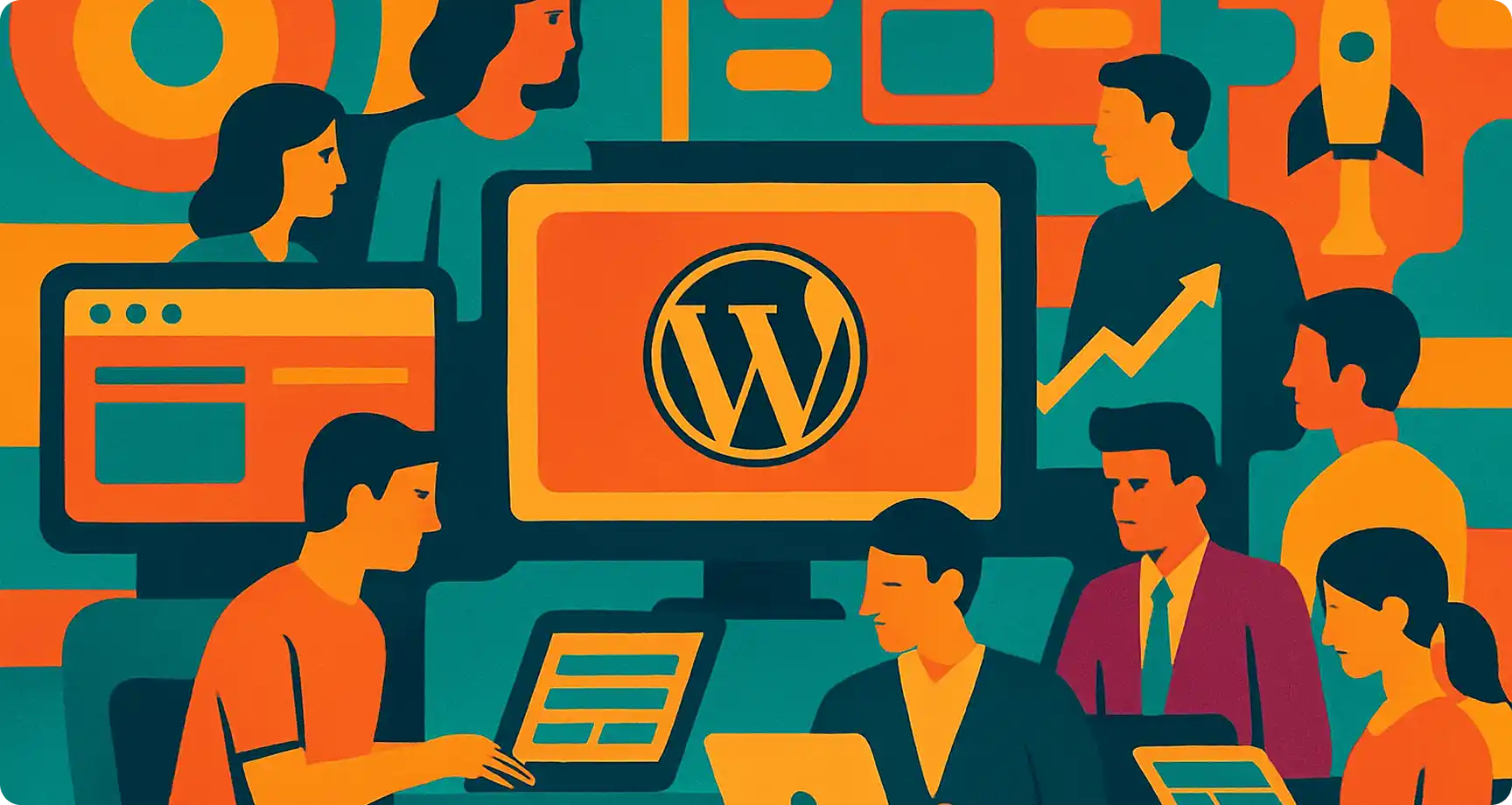
There are roughly 529 million websites online today, and about 60 percent of them run on WordPress. That dominance is not an accident. It comes from flexibility and a massive ecosystem of themes, plugins, and developers who keep the whole thing moving. For startups and SaaS companies, WordPress offers a fast, scalable way to build and manage a web platform without much overhead.
But here is the catch nobody mentions in the sales pitch. Quality WordPress development is not "install a theme and call it a launch." It is architecture that scales, performance that holds, and a clean codebase that does not collect security holes like a screen door collects flies. The agencies below have actually mastered that craft, turning WordPress from a blogging tool into something closer to an enterprise platform.
The Top 10 WordPress Web Development Agencies in 2026
1. Integritas Agency
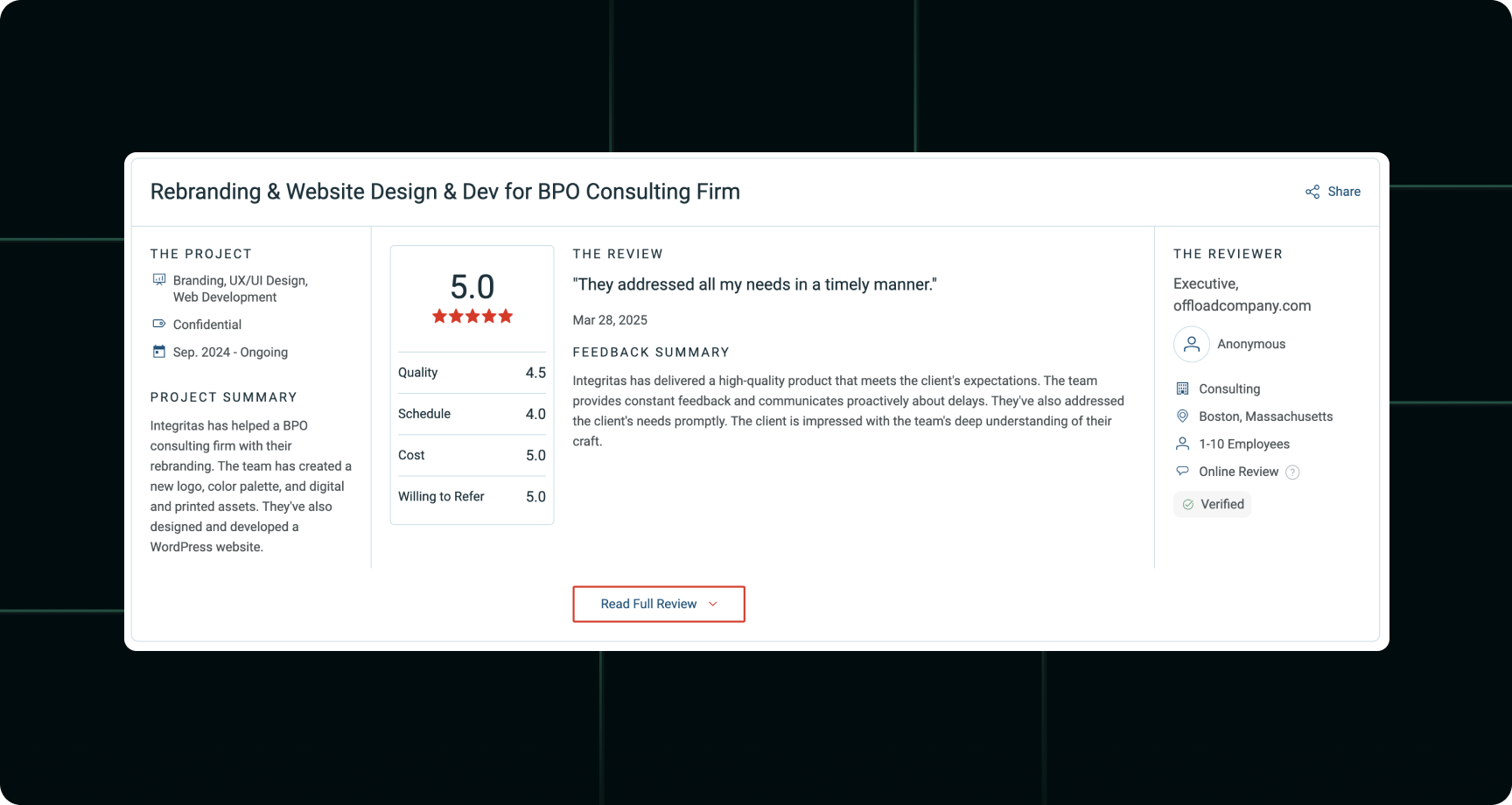
Full disclosure: this is our list, so of course we are first. Roll your eyes, then check the actual reasons. We do custom WordPress development built for SaaS startups, with a focus on scalability and clean architecture rather than plugin pile-ups. We design and build in house, our work has won CSS Design Awards for UI, UX, and Innovation, and we do not ship recycled themes with a new logo slapped on top.
Strong points: custom builds, serious performance optimization, and a codebase your future developers can actually maintain. Weak point, in the spirit of honesty: we specialize in custom work, so we are not the budget pick for a quick three-page site.
2. WP Buffs
A maintenance-first agency whose real strength is keeping existing sites healthy. Ongoing support, performance tuning, and security for established WordPress sites. Excellent if your site already works and you want it to keep working. Less suited to complex custom builds from scratch.
3. Codeable
Codeable connects you with vetted WordPress freelancers for custom work, from small fixes to full builds. The talent is genuinely strong. The trade-off is the freelance model itself, which can lead to inconsistency depending on who you draw.
4. 10up
Known for enterprise-grade WordPress that handles massive traffic and complex interactions. If your platform needs to survive a launch-day stampede, 10up has the muscle. The flip side is the price tag, which is steep for an early-stage startup.
5. Human Made
WordPress at genuine enterprise scale, especially for global brands juggling content across many regions. They often integrate custom applications with WordPress itself. Exceptional at large scale, complete overkill for anything small.
6. WP Engine
Primarily a hosting provider that also does strong WordPress development, with a focus on speed, scalability, and security. Great if hosting and performance are your main concern. Development sits more as an add-on than the core offering.
7. Multidots
A global agency specializing in complex WordPress development for enterprise clients, built for scale and the long game. Better suited to ambitious projects than minimalist, lean builds.
8. rtCamp
Lean and performance-obsessed, rtCamp cares more about back-end architecture and scalability than flashy visuals. If raw performance is the priority, they deliver. If you want a design-led experience, look elsewhere.
9. WebDevStudios
Custom WordPress development with smooth third-party integrations and solid, maintainable architecture. The custom approach costs more than template work, which is exactly why the results last longer.
10. Valet
Security and optimization specialists who keep WordPress sites fast, safe, and reliable. Strong on the technical health side, lighter on custom front-end design.
Headless or Traditional WordPress? Know Before You Brief
Before you hire anyone, decide which kind of WordPress development you actually need, because the term covers two very different setups now.
Traditional WordPress keeps the content and the front end (the part visitors see) bundled in one system. It is quick to launch and easy for non-technical people to run. The limits appear when you want a fully custom front end or need the same content feeding a site, an app, and a dashboard at once.
Headless WordPress separates the two. WordPress becomes the content engine, and a modern front end pulls that content through an API, the connection that lets two systems talk. You gain speed and flexibility, and you pay for it in extra engineering. For SaaS products heading toward apps and multiple surfaces, headless is often the smarter long-term bet. For a content-heavy marketing site run by a small team, traditional WordPress is usually plenty. A good agency asks where you are headed before pushing either one.
How to Choose the Right WordPress Web Development Agency
Not all WordPress development is created equal, and the pitch always sounds great. A few questions cut through it:
- Do they actually focus on scalable architecture, or reach for a plugin every time?
- Can they optimize seriously for speed and performance, not just promise it?
- Do they handle headless WordPress, or only traditional builds?
- What is their real experience with third-party integrations?
- Is their codebase clean and maintainable, or a mystery only they can decode?
The answers separate a team that builds you an asset from one that builds you a future headache with a monthly retainer attached.
Common WordPress Mistakes That Cost You Later
Most WordPress disasters are self-inflicted and entirely avoidable. They rarely look dangerous on launch day, which is exactly why they survive long enough to do damage. The usual offenders:
- Plugin overload, where the site leans on twenty plugins that each do a sliver of the job and collectively become a security and performance liability
- A cheap, bloated theme stuffed with features you will never use, dragging down speed for the sake of a flashy demo
- No update discipline, so the site quietly rots until one outdated plugin opens the door to trouble
- Treating WordPress development as a one-time build rather than something that needs occasional care
A good agency builds to avoid these from the start, with fewer dependencies, cleaner code, and a structure that does not punish you for growing.
Signs You Have Outgrown Your Current WordPress Setup
Sometimes you do not need a new agency, you need to admit the current setup has hit its ceiling. A few honest signals:
- Every small change requires a developer, because the build is too fragile to touch safely
- The site slows to a crawl whenever traffic actually shows up, which is the worst possible time
- You are paying monthly for a stack of plugins that overlap and occasionally fight each other
- Security updates fill you with dread because something always breaks afterward
If two or three of those feel familiar, the problem is not WordPress itself. It is how your particular site was built, and that is fixable with the right WordPress development partner.
What WordPress Development Actually Costs
Nobody likes to print numbers, so here is a straight version. A custom WordPress site with a clean, editable structure usually starts in the low thousands and climbs with complexity, integrations, and custom design. Enterprise builds with heavy traffic, custom applications, and strict security run considerably higher. The cheapest quote is rarely the cheapest project, because a build that needs replacing in a year quietly charges you twice. The agency worth paying is the one whose work you do not have to redo.
Final Thoughts
WordPress development is not about templates and themes anymore. In 2026 it is a full content management solution that, done right, scales with your business and makes your developers slightly less cynical about Mondays. The wrong build breaks every time you sneeze near it. The right one fades into the background and lets you focus on growth. If you want a WordPress site that does the latter, take a look at what we do and let us build something that lasts.